A research lab · Reykjavík

A biology that thinks.

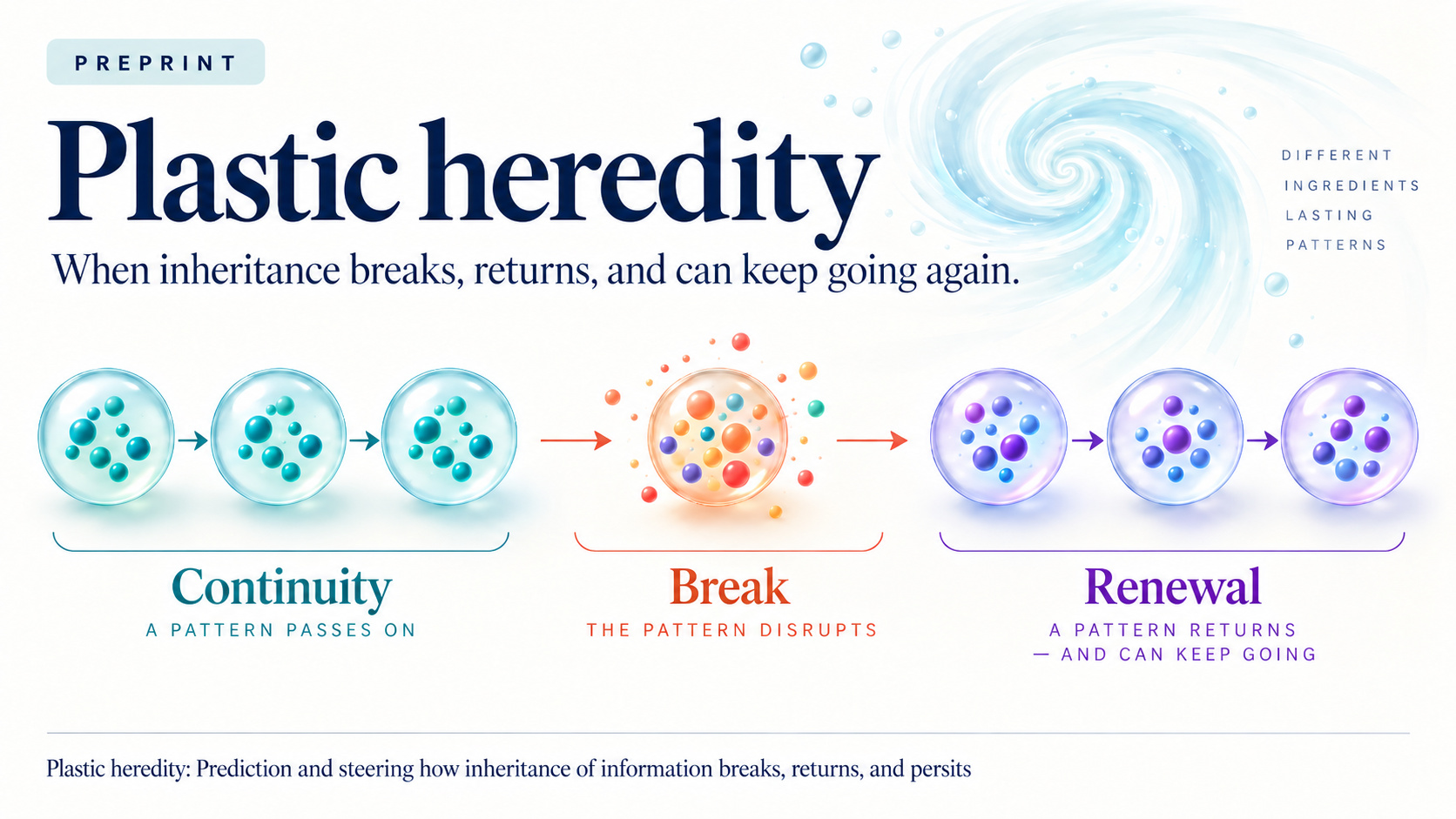
Eidosoma studies collective intelligence in cells, regeneration, and artificial life — using AI scientists to extend computational biological research.

Active research threads
Bioelectricity · Regeneration · ALife
Method
AI-guided computational experiments
Location
Reykjavík · Iceland
Manifesto

We are building the instruments of a living science.

Biology is the last great frontier of intelligence, and it is one we are barely learning to listen to. For centuries we have treated cells as chemistry. They are also decision-makers — solving problems together, in a language we are just beginning to read.

Eidosoma exists to build the collaborators that will help us read that language — and eventually, converse with it. Our AI Scientist is part of that lab: research infrastructure designed to extend exploration while keeping science human-directed.

01 · Research

A laboratory that never closes.

Eidosoma conducts computational biological research as a continuous loop between human judgement and machine exploration. Our AI scientists help design, execute, and revisit experiments across three interlocking research directions.

Thread 01

Bioelectricity & collective intelligence of cells

Cells talk to each other through many channels — chemical signalling, mechanical forces, and bioelectricity. Building on the work of Michael Levin and others, we model these signals as a substrate for distributed cognition — how a collection of cells 'decides' the shape of a limb, an organ, or a tumour.

If a cell collective is solving a problem, can we read it, and can we answer back?
Thread 02

Regeneration, cancer & aging

Regeneration, cancer, and aging are three modes of the same distribution — tissues losing, regaining, or drifting from the ability to agree on what they are. We search for bioelectric and molecular interventions that nudge a system back toward its target morphology.

What is the shortest message that can convince a tumour to rejoin the body?
Thread 03

ALife at the intersection of AI and biology

We grow open-ended populations of simulated organisms, protocells, and neural substrates — testing how agency, memory, and morphology co-evolve, and what the strongest candidates can teach us about the origins of mind.

What does a minimum viable mind look like, and can we cultivate one?
02 · AI Scientist

A scientist. Not a chatbot with a lab coat.

The Eidosoma AI Scientist is part of the lab's research infrastructure. It reads across the literature, proposes hypotheses, writes and runs computational experiments, and returns its results to human scientific review — expanding the space we can investigate without surrendering scientific direction, taste, or judgement.

  • 01Expands the range of questions a small lab can investigate
  • 02Remains directed and reviewed by human scientists
  • 03Keeps code, parameters, reasoning, and negative results connected
  • 04Links literature, hypotheses, experiments, and synthesis in one research loop
  • 05Revisits results as new evidence changes the context
Modules

Built from composable research modules.

The lab's AI Scientist draws on a set of composable research modules. Below are three of the core ones. Tap to unfold.

01
Collective Intelligence Processor
Continuous literature and web review across active research questions.

The CIP follows preprints, patents, code, conference schedules, registries, and lab notes, then filters and cross-references them against the lab's active questions. Novelty, surprise, and contradiction are prioritised over volume.

02
Experiment Coding Manager
Runs a team of AI coders that build and execute computational experiments.

The ECM decomposes a research question into runnable experiments, spawns a team of specialised AI coders, reviews their pull requests, and orchestrates execution on the cluster. It keeps a full experiment graph — every run, every parameter, every negative result — so that nothing is ever re-discovered by accident.

03
Evolution Engine
Optimisation through genetic algorithms and open-endedness — MAP-Elites, NSLC, quality-diversity.

Good science rarely comes from climbing the steepest gradient. The Evolution Engine maintains a living archive of diverse candidates — models, protocols, organisms, hypotheses — and keeps exploring the space of what has not yet been tried. Underneath: MAP-Elites, novelty search, and open-ended divergence.

Team

A small lab with always-on collaborators.

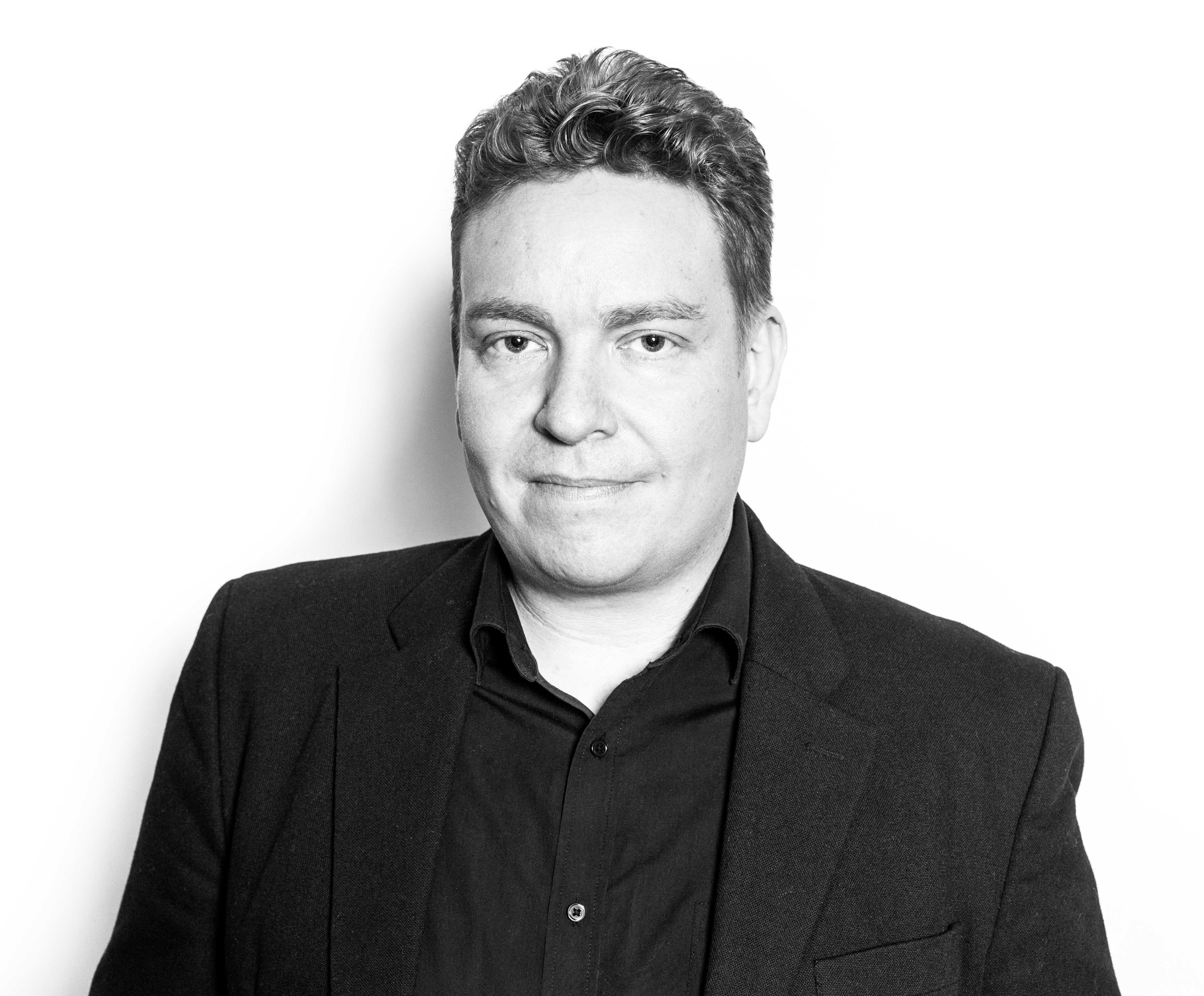
Robert Bjarnason
Founder

Robert Bjarnason

Founder — AI & Collective Intelligence

Robert has spent three decades at the intersection of AI, ALife, and collective intelligence — designing systems that help groups of humans, and now groups of cells, think better together. Eidosoma is his answer to a question he has been carrying for years: what would a biology laboratory look like if it worked alongside a collective mind that kept learning?

📍 Reykjavík, Iceland

Explore a question with us in living science.

We welcome conversations with researchers and labs working across bioelectricity, regeneration, artificial life, and AI-enabled science.